Legally start your business with a trade license in Dubai. This guide covers the license types, the mainland versus free zone choice, what the process actually costs, how long it takes, and the 2026 fee relief that is running right now.
Quick answer: A trade license is the government permit that lets you legally trade in Dubai. You choose a jurisdiction (mainland or free zone), pick a license type that matches your activity, reserve a trade name, get initial approval, secure premises, and pay. Most straightforward applications complete in about 3 to 10 working days. Through 2026, Dubai is running AED 2.5 billion of business support that includes fee deferrals and a waiver of late renewal fines, though it does not cover every license.
The 2026 fee relief, and what it actually covers
Dubai has introduced two support packages in quick succession. The first, worth AED 1 billion, launched on 1 April 2026. Dubai's Executive Council then approved a second package worth AED 1.5 billion in May, bringing the total to AED 2.5 billion in under two months. The second package contains 33 initiatives, rolled out over three to twelve months, with each government entity announcing its own timeline.
Three points matter if you hold or are applying for a commercial license. All three come from the Dubai government's own business support guidance.
You can renew without a valid tenancy contract, temporarily. A commercial license can be renewed without a valid tenancy contract during the support period, provided the tenancy contract is renewed within three months of the license renewal date. This removes the usual deadlock where an expiring Ejari blocks the license renewal.
Late renewal fines are being waived. Automatic monthly fines that result from a delayed commercial license renewal are waived during the specified period. If you have let a renewal slip, this is the window to fix it.
It does not apply to every license. This is the part most write-ups leave out. Asked directly whether the initiative applies to all commercial licenses, the government's answer is no: it applies to specific sectors, in line with approved regulations and procedures. Businesses can check their own eligibility through the official channels or electronic systems of the relevant authority, or by contacting the Department of Economy and Tourism directly on +971 600 55 55 59.
Free zone licenses sit outside the DET programme, because each free zone authority sets its own fee schedule.
What is a trade license and why do you need one?
A trade license in Dubai is a legal document issued by the relevant government authority, such as the Department of Economy and Tourism for the mainland. It permits you to carry out specified commercial, professional, or industrial activities. Operating without a valid license is illegal and can lead to fines and closure of the business.
Beyond legality, the license is what unlocks everything else:
- Credibility. It legitimises your business with clients, partners, and government bodies.
- Operations. You cannot open a corporate bank account, sign a lease, or sponsor employee and family visas without one.
- Growth. It lets you bid on contracts, expand, and trade locally and internationally.
Mainland or free zone: which one fits
This is the first real decision, and it shapes ownership, where you can sell, and what premises you need.
| Mainland (DET) | Free zone | |
|---|---|---|
| Where you can trade | Anywhere in the UAE and internationally, without a local distributor | Inside your zone and internationally. Selling into the UAE market usually needs a distributor or a mainland branch |
| Foreign ownership | 100% on most activities since the 2021 reforms | 100% |
| Premises | Physical office with a registered tenancy contract (Ejari) | Flexible, including flexi-desk and virtual office in many zones |
| Government contracts | Eligible | Generally not eligible directly |
| Corporate tax | 9% above the threshold | 0% only if the company meets the Qualifying Free Zone Person conditions, otherwise 9% |
| Fee relief in 2026 | Covered by the DET packages, subject to sector eligibility | Outside the DET programme; each zone sets its own fees |
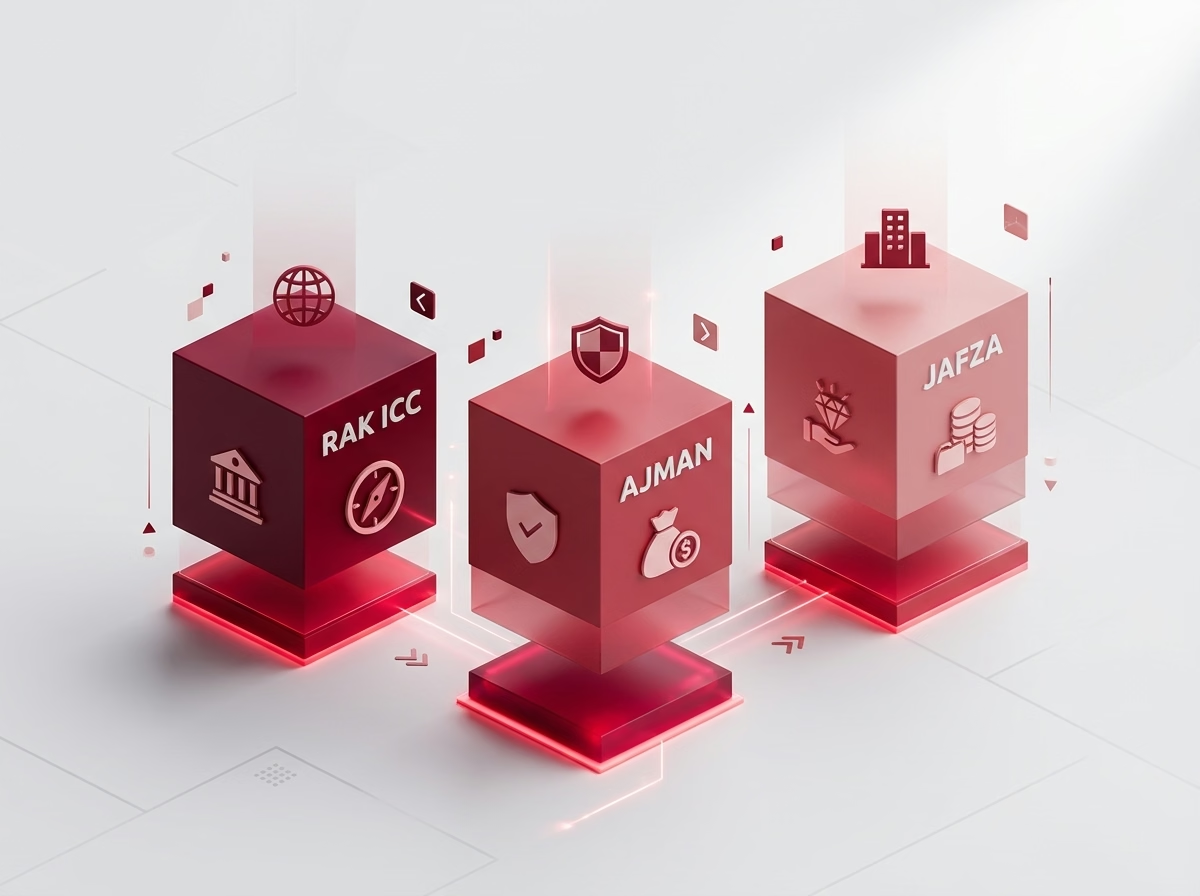
Mainland suits businesses that want to sell directly to UAE customers, hold a physical office, or work with government. Free zones suit international trade, startups, and businesses that do not need a mainland presence. Dubai has more than 30 free zones, each with its own authority and pricing.
Types of trade license in Dubai
Once you have chosen a jurisdiction, the license type has to match what you actually do. Picking the wrong one is the most common reason an application is rejected.
| License type | Who it is for | Typical examples |
|---|---|---|
| Commercial | Buying and selling goods | Import and export, retail, trading companies |
| Professional | Selling services and expertise | Consultants, agencies, designers, accountants |
| Industrial | Making or assembling products | Manufacturing, processing, packaging |
| General trading | Trading many unrelated goods under one license | Multi-category traders wanting flexibility |
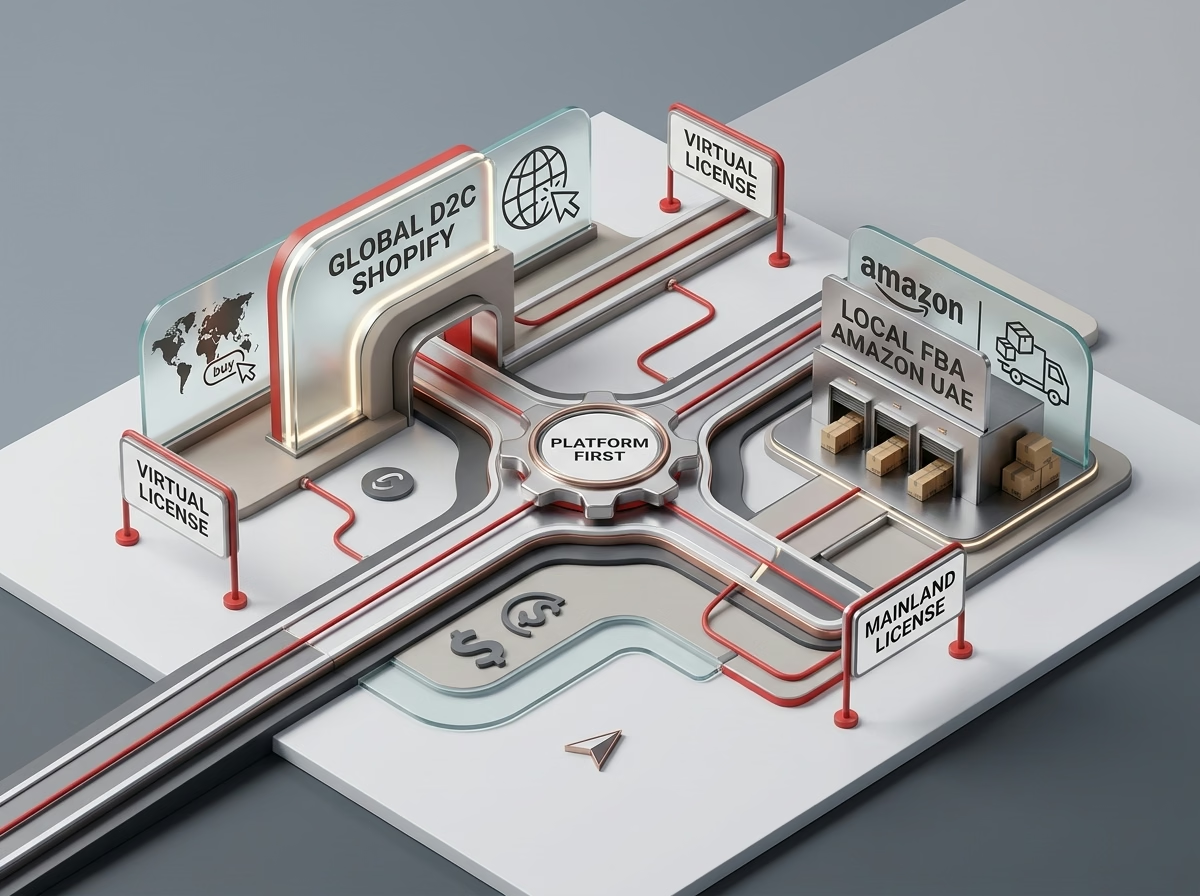
| E-commerce | Selling online | Web shops, marketplace sellers, social commerce |
If your activity list mixes trading and services, you may need more than one activity on the license, which affects the fee. Our guide to professional versus commercial licences covers that choice in detail.

What a trade license costs
Be careful with the round numbers you see quoted online. The honest answer is that there is no single price, because the total depends on your activity list, legal form, jurisdiction, premises, and how many visas you need. What you can plan for is the shape of the bill.
A mainland application is built from separate line items, not one fee:
| Cost line | When you pay it | What drives the amount |
|---|---|---|
| Trade name reservation | Before initial approval | Whether the name is standard or uses a foreign or personal name |
| Initial approval | Early in the process | Fixed per application |
| Memorandum of Association notarisation | Multi-shareholder companies only | Share capital and number of partners |
| License issuance | At the end | Number of activities on the license |
| Premises and Ejari registration | Before final approval | Office grade, size, and location |
| Immigration and labour establishment cards | After the license | Fixed, needed before you sponsor any visa |
| Visa costs | Per person | Number of visas, inside or outside country application |
Two practical points. First, the license fee itself is usually a smaller part of the total than the premises cost, which is why a flexi-desk in a free zone can look so much cheaper than a mainland office. Second, this is an annual commitment, not a one-off: licenses run for a year and must be renewed, so budget for renewal from year two.
Free zone packages are usually quoted as a bundle, and start from roughly AED 12,000 depending on the zone and what is included. DET publishes current mainland fees, and because they change, confirm the figures for your specific activity list before you budget. You can reach the Department of Economy and Tourism on +971 600 55 55 59 or at info@dubaidet.ae.
How long it takes
Most applications complete in about 3 to 10 working days once the paperwork is right. The variation is almost never the government's processing speed. It is these four things:
- Activity selection. Getting the activity list wrong sends you back to the start.
- Trade name approval. Names that use a foreign word, a personal name, or anything close to an existing company take longer, and can be rejected outright.
- External approvals. Some activities need a sign-off from another authority before DET will issue. Healthcare, education, food, and legal activities are the usual ones. This is the single biggest cause of delay.
- Premises. A mainland license needs a registered tenancy contract, and arranging that can take longer than the license itself.
If your activity needs no external approval and your name is straightforward, the fast end of that range is realistic. We cover the specific failure points in 5 reasons a Dubai trade licence application gets rejected.
How to get your trade license, step by step
- Define your business activities. List everything you will actually do. This determines the license type and the fee.
- Choose a legal structure. Limited Liability Company, sole establishment, branch, or civil company.
- Reserve a trade name. It must be unique and follow the UAE naming rules. No religious references, no country names, and no abbreviating a personal name.
- Apply for initial approval. This is the government's no-objection to you starting the process. It does not let you trade yet.
- Get external approvals if your activity needs them. Do this early, not last.
- Draft and notarise the Memorandum of Association. Needed where there is more than one shareholder.
- Secure premises. Mainland needs a physical office and a registered Ejari. Free zones may accept a flexi-desk.
- Submit documents and pay. Passports for all partners, initial approval, the notarised MOA, and the tenancy contract. The license is issued after payment.
- Open the file for visas. Establishment cards with immigration and labour come after the license, and before any visa application.
Read more
- 5 Reasons a Dubai Trade Licence Application Gets Rejected
- Professional Licence vs Commercial Licence Dubai
- Opening a Bank Account in Dubai as an Expat
- DMCC vs IFZA vs Meydan: The Big Free Zone Comparison 2026
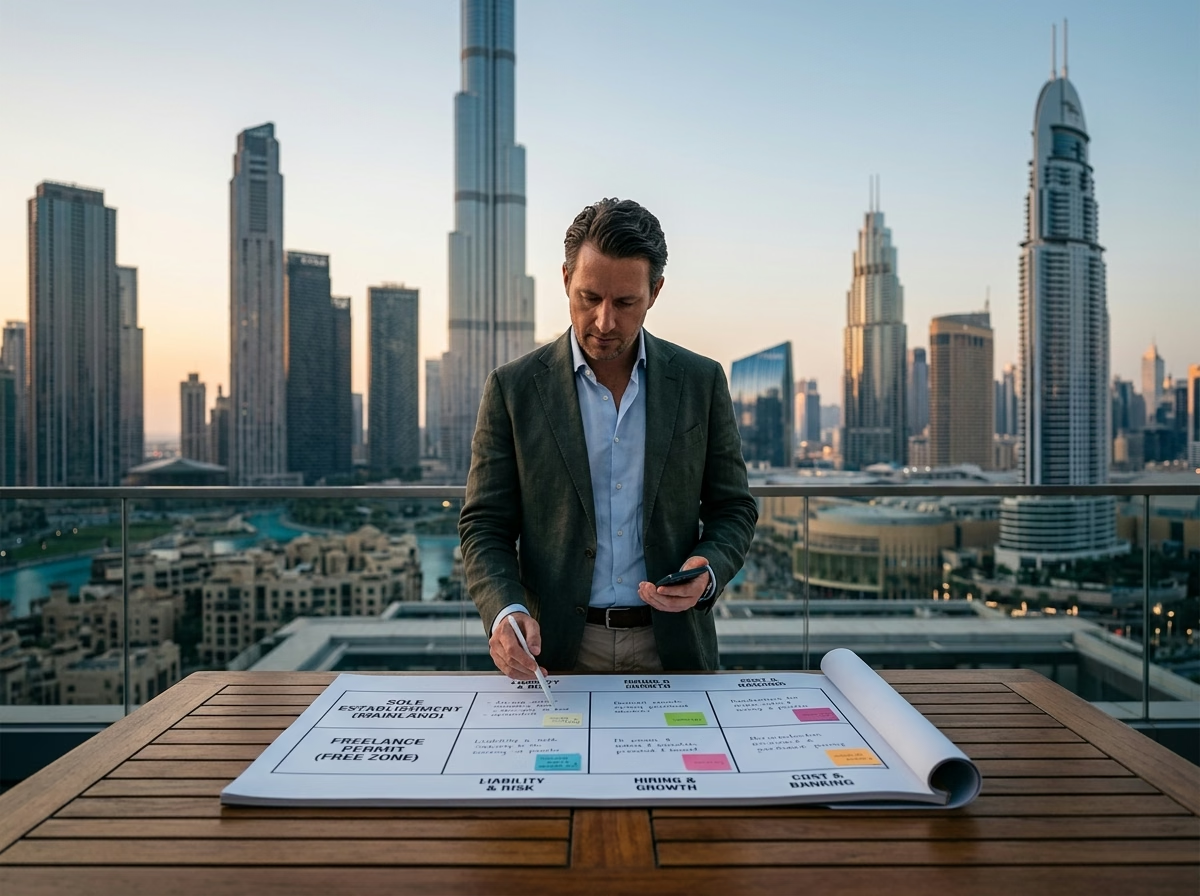
- Sole Establishment vs Freelance Permit Dubai 2026: A Decision Matrix
- E-Commerce License Dubai: Shopify and Amazon FBA from the UAE in 2026
- Importing Goods into Dubai: Your Guide to Customs, Duties, Logistics