Accurate paperwork is essential for customs clearance in Dubai. Missing or incorrect paperwork is the most common cause of delays at customs.
The process of importing goods into Dubai requires careful planning. First, you must set up a UAE trading company with the proper license (from the local Department of Economic Development) and register with Dubai Customs to get a Customs Business Code. This code, often called a Dubai customs client code, allows you to submit import declarations. Mainland (onshore) companies pay customs duties, while Free Zone companies import duty-free if goods stay within the zone. For example, Dubai Customs imposes a standard 5% duty on the CIF (cost + insurance + freight) value of most goods, whereas imports into Free Zones are exempt from Dubai customs duties unless the goods later enter the mainland. Note that certain high-tax items (alcohol 50%, cigarettes 100%) and some anti-dumping rates can be much higher.
Dubai Customs Duties & VAT Calculations
Customs duties in the UAE are based on HS codes and normally 5% of the CIF value. Importers must correctly classify goods (using 12-digit GCC HS codes) to apply the right tariff. This is a key part of learning how to calculate customs duty in the UAE. Some categories enjoy 0% duty: staple foods (meat, vegetables, grains), health and medical products, medicines and vaccines, and educational materials. In contrast, tobacco products face a 100% duty. Businesses should consult the UAE Customs Tariff Schedule to verify rates.
After duty is assessed, import VAT in the UAE is added at 5%. The formula is: VAT = 5% × (CIF value + Customs Duty).
For example, importing AED 100,000 CIF of goods with AED 5,000 duty yields AED 5,250 in import VAT UAE. Registered businesses must include this import VAT in their VAT returns (often handled via the reverse-charge mechanism). If a company’s FTA (Federal Tax Authority) account is linked with Dubai Customs, the VAT can be auto-debited from the company’s tax account upon clearance.
Required Import Documentation
Accurate paperwork is essential for customs clearance in Dubai. The documents required for import in Dubai include several key items:
- Commercial Invoice: Must detail the shipment’s value, units, and Incoterms (e.g., CIF or FOB).
- Packing List: Itemizes the contents, weights, and dimensions of every package. Customs uses this to verify cargo against invoices and HS classifications.
- Bill of Lading (B/L) or Airway Bill: A carrier’s receipt and title document for the shipment that names the shipper and consignee.
- Certificate of Origin (COO): Official proof of where the goods were made. Authorities use the COO to determine applicable duties and apply any preferential rates under trade agreements.
- Import/Export License or Trader License: Your UAE business license which authorizes the company to trade internationally.
- Special Permits/Certificates: Certain goods need extra clearance. For example, foodstuffs require a Health Certificate and Halal certificate; pharmaceuticals often need Ministry approvals.
- Power of Attorney (POA): If you hire a customs broker or agent, you must furnish a POA authorizing them to clear your goods.
Missing or incorrect paperwork is the most common cause of delays at customs.
Free Zone vs. Mainland Considerations
Dubai’s free zones offer import-friendly rules: goods brought into a free zone are duty-free as long as they stay there. However, if you move goods from a free zone to mainland UAE, you must declare them and pay the usual 5% duty. This distinction is critical for planning your e-commerce logistics in Dubai, as it affects your final landed cost. Likewise, while exports from an FTZ to countries outside the GCC leave customs cleared (no duty), re-exporting from a free zone to another GCC member or to the mainland will require a declaration.
Import Process Overview
The general steps for importing goods into Dubai are:
- Register and Plan: Ensure your Dubai company is licensed for import and you have a Dubai customs client code. Arrange freight through a carrier or freight forwarder.
- Shipping & Pre-Advice: Send your documents (invoice, COO, packing list) to the importer or broker. The shipping line or airline sends a Manifest to Dubai Customs before arrival.
- Prepare Customs Declaration: On arrival, submit an electronic import declaration via the Dubai Trade/Mirsal2 portal. Enter HS codes and values exactly. The system will auto-calculate duties and VAT.
- Payment of Duties & VAT: Once the declaration is accepted, pay the Dubai customs duties and VAT.
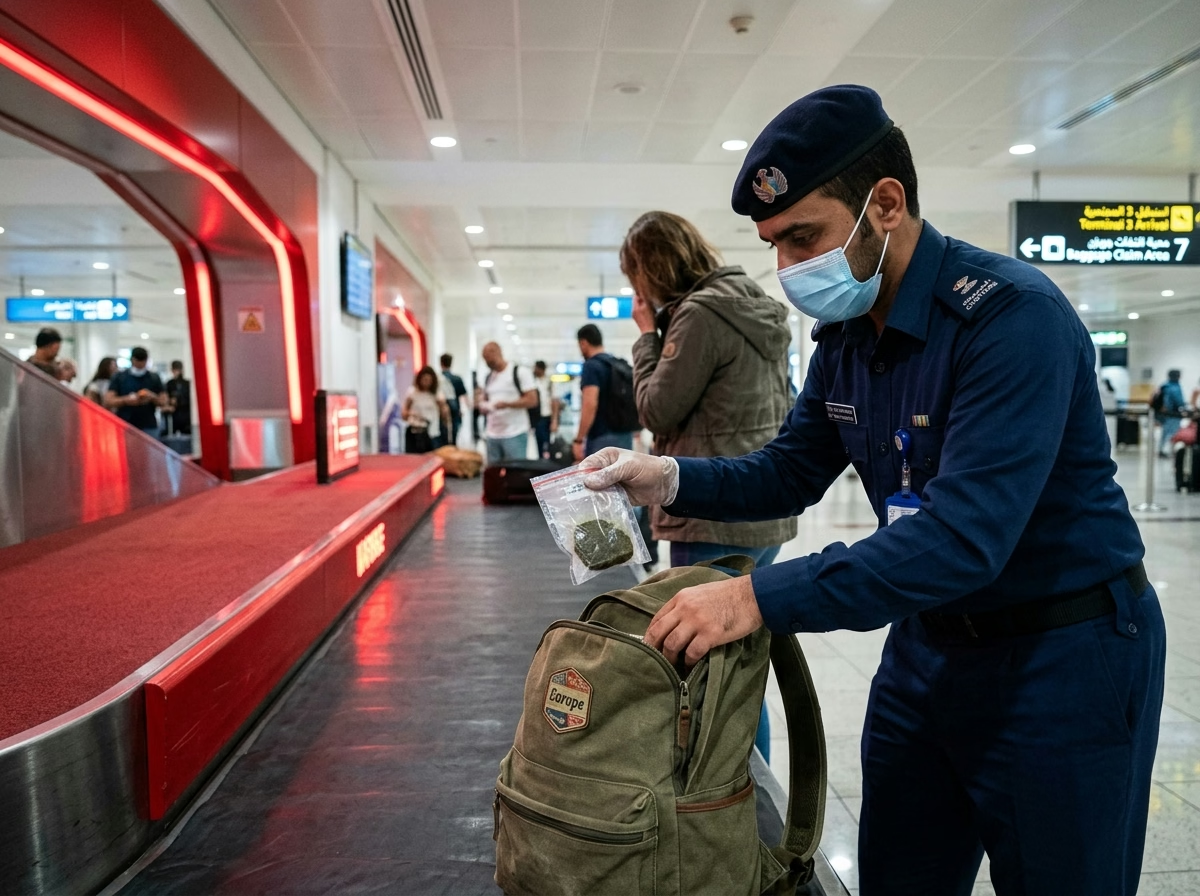
- Inspection & Release: This is the core of the customs clearance in Dubai process. Customs may hold certain shipments for physical inspection. When all checks are satisfied and payments are done, the release order is issued.
Working with Freight Forwarders & Customs Brokers
Especially for first-time importers, it pays to use professional agents. Licensed freight forwarders arrange transport, and a licensed customs broker (C&F agent) will file declarations on your behalf. These shipping and clearance agents in Dubai add value by:
- Classifying goods under the correct 12-digit HS codes.
- Preparing and submitting all documents required for import in Dubai.
- Calculating duties/VAT.
- Managing inspections and approvals.
Their expertise can prevent costly errors and avoid demurrage fees, making them a crucial part of your e-commerce logistics in Dubai. Always sign a POA so your broker can act on your behalf.
Importing Goods Into Dubai: Tips & Resources
- HS Code Research: Use the UAE Customs online tariff lookup to verify duty rates.
- Duty & VAT Calculators: Use online tools to estimate costs. This is the easiest way how to calculate customs duty in the UAE and the subsequent import VAT UAE, which is always 5% on (CIF + duty).
- Compliance: Check UAE’s official lists for prohibited or restricted items.
- Records: Maintain meticulous records and customs clearance proofs for VAT filing and audits.
- Stay Updated: Customs rules can change; refer to Dubai Customs for updates.
By following these steps, importing goods into Dubai can be a smooth process. Proper documentation and using professional freight/customs partners are key to avoiding delays and ensuring your goods reach the market without unexpected costs.
Read more
- Opening a Bank Account in Dubai as an Expat
- DMCC vs IFZA vs Meydan: The Big Free Zone Comparison 2026
- Dubai's Booming Economy: A Data-Driven Look at Growth and Opportunity
- How Government Support for Businesses in UAE Is Creating a Global Business Hub
- The Ultimate Guide to the Dubai Golden Visa for Investors in 2025
- Sole Establishment vs Freelance Permit Dubai 2026: A Decision Matrix
- E-Commerce License Dubai: Shopify and Amazon FBA from the UAE in 2026
- Dubai Remote Work Visa for Digital Nomads: VWP, Green Visa, and Freelance Permit