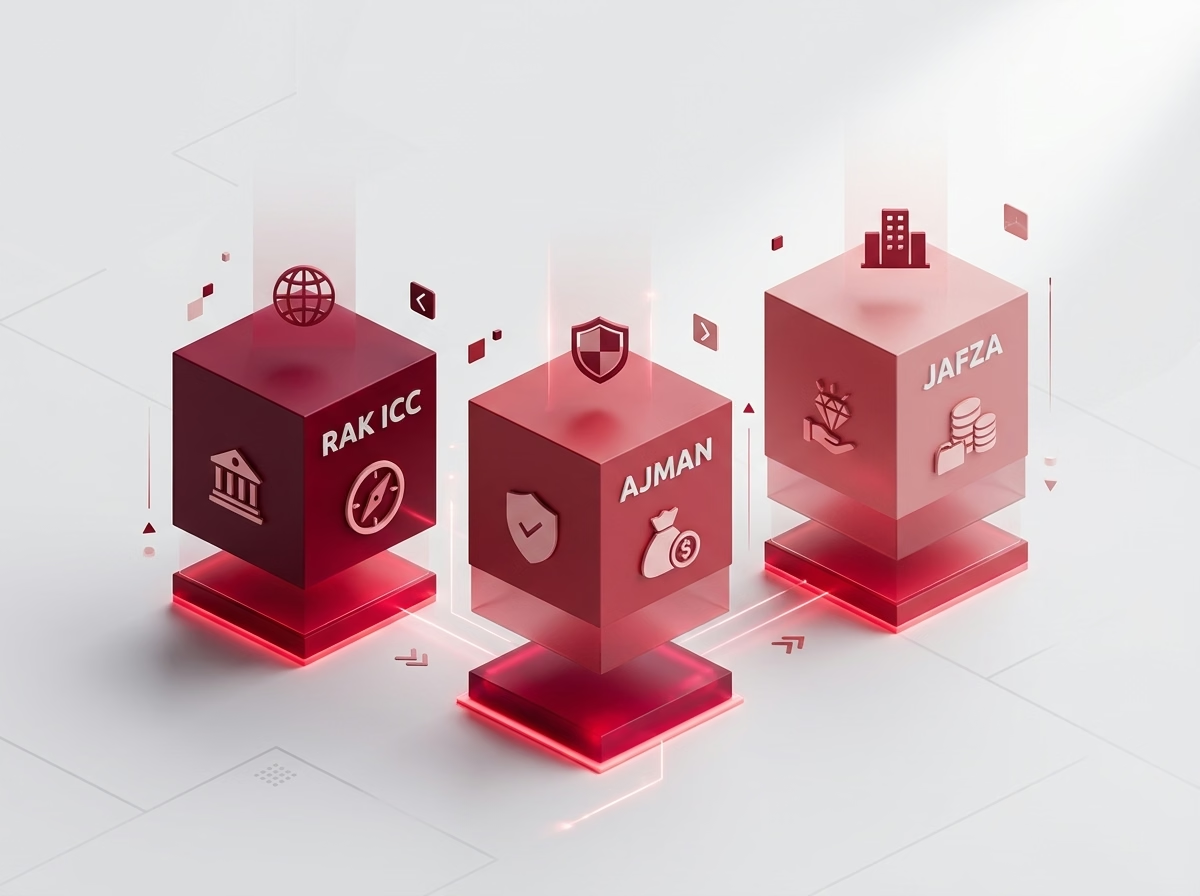
You want to run a Shopify D2C brand or an Amazon FBA business from Dubai. The license question gets all the airtime, but the platform decides everything. The right E-Commerce license Dubai for a Shopify store selling globally is not the right setup for an Amazon UAE seller shipping to GCC customers, and neither is the right fit for a hybrid operator running both at once. This guide flips the usual order. We start with where you sell, then we work backwards to the license, the bank account, the payment gateway, the customs setup, and the German-side tax exposure that DACH founders forget until it bites.
E-Commerce License Dubai 2026: Three Seller Profiles, Three License Paths
The E-Commerce license Dubai market in 2026 is not one product. It is three distinct operational stacks dressed up under one keyword. The cheapest free-zone license at AED 5,750 makes sense for a Shopify operator selling to EU and US consumers from a virtual office in Sharjah Publishing City. It does not make sense for an Amazon UAE FBA seller who needs a mainland DED license to access local fulfillment centers, a UAE bank account that Amazon Seller Central will accept, and warehouse access for inventory. A hybrid operator running Shopify D2C plus Amazon UAE plus eBay parallel needs yet another configuration, usually IFZA plus a mainland trade license combo or Dubai CommerCity if warehousing is part of the play.
Get the platform sequence right and the license falls out of it. Get the license first and you spend the next twelve months retrofitting your stack around a setup that does not match how you actually sell.
Before You Choose a License: Where Do You Sell?
Which E-Commerce license Dubai fits you?
The platform determines the license, not the other way around. Three questions answer 90 percent of the decision before you even open a free-zone catalogue.
First, who is your customer? UAE residents, GCC consumers, EU buyers, US consumers, or a mix? Amazon UAE sells to UAE and GCC. Shopify can sell anywhere. The customer geography drives whether you need a UAE bank account that pays out from Amazon (yes, mainland DED or e-commerce free zone), a Stripe UAE or Telr gateway (yes, any e-commerce license), or just a payout rail back to a German bank account (different conversation, different setup).
Second, where is the inventory? In a Dubai warehouse for Amazon FBA, yes you need fulfillment access and either CommerCity, JAFZA, or mainland DED. Drop-shipped from Aliexpress to a German consumer? You can run from a virtual-office free-zone setup. Held in a German warehouse and shipped from there to UAE? You may not even need a UAE license, you may need a German GmbH and a UAE distributor.
Third, what is your annual revenue trajectory? Below AED 187,500 voluntary VAT threshold, the lightweight setup is fine. Above AED 375,000 mandatory VAT, you need VAT registration, e-invoicing readiness, and an accountant who understands UAE VAT and (if you are German) the VAT-OSS interaction with EU sales.
Answer those three questions and we can name the license. Skip them and you will buy the wrong one.
Profile 1: Shopify D2C Brand with Global Reach
The Shopify D2C operator sells direct to consumer through their own storefront, usually with a brand identity, paid social acquisition, and inventory either drop-shipped or held in a third-party fulfillment center. The customer is global. The Dubai operation is the legal entity, the bank account, and the founder visa. The actual selling happens through Shopify checkout, Stripe (or Stripe UAE if available), and a fulfillment partner that may or may not be in the UAE.
For this profile, the SPC Free Zone starter package at around AED 5,750 is the cheapest viable entry. It includes one visa, a virtual office, and an e-commerce activity code. IFZA at around AED 12,500 to 12,900 makes sense if you need three visas (founder plus two team members) or if you want a slightly more recognized free-zone brand. Meydan FZ around AED 12,000 is a third option, popular with e-commerce operators who do not need physical office space.
The Shopify operator does not need a mainland license unless they plan to sell to UAE consumers through retail channels or open a physical store. For pure online D2C, free zone is correct.
The platform sequence for Shopify is straightforward. License first, then UAE bank account (Wio, Mashreq Neo, or Emirates NBD), then Stripe or Telr gateway connected to the UAE bank, then Shopify store live with the gateway integrated. Total time from license application to first sale: typically 60 to 90 days.
Profile 2: Amazon UAE FBA Seller (Local GCC Market)
Amazon UAE FBA is a different beast. Amazon Seller Central UAE requires a valid UAE trade license with e-commerce activity codes, a UAE bank account in the seller's name (not a foreign account), a UAE address for verification, and a TIN (Tax Identification Number) post-2023. Amazon will not pay out to a German bank account, full stop. This single requirement eliminates many of the cheaper free-zone setups that promise a "virtual" UAE presence without a substantive bank-account relationship.
For this profile, the realistic options are Dubai CommerCity at AED 12,000 to 15,000+ (purpose-built e-commerce free zone with warehousing inside the zone), DED Mainland at AED 10,000 to 25,000 (depending on activity codes, requires Ejari and physical office or co-working), or IFZA paired with a mainland Amazon trade license. CommerCity is the most "Amazon-native" choice because the warehousing is built in and the zone is designed around fulfillment workflows.
The Amazon UAE FBA operator must also handle customs of record, import VAT at the AED 375,000 threshold, and Amazon's own seller compliance which includes Federal Decree-Law No. 14 of 2023 modern-trade requirements. The platform onboarding is sequenced: license, bank account, Amazon Seller Central application with TIN, FBA inventory shipment to Amazon's Dubai fulfillment center, listing creation in English and Arabic per Amazon UAE rules, then live selling. Time from license to first sale: typically 75 to 120 days because Amazon's verification cycles are slower than Shopify.
Profile 3: Hybrid Seller (Shopify + Amazon + eBay Parallel)
The hybrid operator runs multiple channels. They have a Shopify D2C store for brand customers, an Amazon UAE listing for GCC discovery, and possibly Amazon US or eBay for international reach. For this profile, the license has to support both free-zone economics (cheap, fast, virtual) and mainland flexibility (Amazon UAE, retail B2B sales, payment-gateway acceptance from UAE banks).
The cleanest setup is IFZA free zone (around AED 12,500) for the holding company plus a mainland DED Amazon-specific trade license (around AED 10,000) for the Amazon UAE seller registration. Total first-year stack runs AED 25,000 to AED 35,000 including establishment cards, visas, immigration cards, and PRO services. Dubai CommerCity is also viable as a single-zone solution if warehousing is the priority and the operator is willing to pay the premium for purpose-built e-commerce infrastructure.
The hybrid operator's platform sequence is the most complex. License, UAE bank account, payment gateway for Shopify (Stripe UAE or Telr), Amazon Seller Central onboarding for UAE, then mainland trade license activation for Amazon, then VAT registration as soon as combined revenue approaches AED 375,000. Federal Decree-Law No. 14 of 2023 compliance applies across all channels.
License Comparison 2026: SPC FZ vs IFZA vs Meydan vs CommerCity vs DED Mainland
Total 12-month setup cost by free zone
| License Option | 2026 Cost (AED, estimate) | Visa Quota | Office | Best Fit |
|---|---|---|---|---|
| SPC Free Zone | ~5,750 starter | 1 | Virtual | Solo Shopify D2C, lean budget |
| IFZA | ~12,500-12,900 | Up to 3 | Virtual or flexi | Shopify D2C with team, hybrid holding |
| Meydan FZ | ~12,000 | 1-3 | Virtual | Shopify D2C, no office needed |
| Dubai CommerCity | ~12,000-15,000+ | 2-3 | Built-in warehousing | Amazon FBA, fulfillment-heavy |
| DED Mainland | ~10,000-25,000 | Per office size | Ejari required | Amazon UAE seller, retail B2B |
Universal add-ons across all licenses (estimate): establishment card AED 1,200, immigration card AED 600, visa stamping per founder AED 2,500 to AED 5,000, PRO services AED 1,500 to AED 3,000. Add roughly AED 7,000 to AED 12,000 to the headline license fee for a complete first-year setup.
For a deeper line-by-line breakdown of license fees plus all hidden setup costs, see our Dubai e-commerce license cost guide. For the broader trade-license landscape and the differences between free zone, mainland, and offshore structures, the trade license pillar covers the full picture.
Federal Decree-Law 14/2023: What "Modern Trade Regulation" Actually Requires
Federal Decree-Law No. 14 of 2023 is the UAE's modern trade and consumer protection law for digital commerce. According to the federal e-commerce regulation framework on u.ae, the law mandates clear product identity disclosure on every listing, return and refund policies in both Arabic and English, advertising disclosure for influencer marketing, and full consumer-protection compliance for all e-commerce platforms selling to UAE consumers.
The penalty range is AED 5,000 to AED 1,000,000 depending on the severity of the breach. For a Shopify operator selling globally but with UAE customers in the mix, the law applies to those UAE-bound transactions. For an Amazon UAE seller, the law applies to every listing because Amazon UAE customers are the entire market. For a hybrid operator, the law applies wherever a UAE consumer transacts.
The practical compliance steps: bilingual product pages (Arabic and English), a published return and refund policy accessible from every page, clear seller identity (legal entity name, license number, contact), and disclosure on any influencer-led marketing as paid advertisement. None of this is optional in 2026. The validator on Amazon UAE catches missing Arabic descriptions before listings go live, but Shopify operators have to build this themselves.
Bank Account, Payment Gateway, and Amazon UAE Seller Central Onboarding
The single biggest operational chokepoint after the license is the UAE bank account. Amazon UAE will not pay out to a non-UAE bank account. Shopify can pay out to any bank, but if you want a Stripe UAE or Telr gateway connected to your storefront, you need a UAE bank to anchor it. The realistic options for a new entity in 2026: Wio Bank (digital, fast onboarding, AED 50 to AED 100 monthly), Mashreq Neo (digital, mid-market), Emirates NBD or Mashreq (traditional, slower but more credibility for high-volume e-commerce).
The bank-account opening sequence: license issued, establishment card and immigration card complete, founder visa stamped, Emirates ID issued, then bank application. Total time from license issuance to active bank account: typically 30 to 60 days.
Payment gateway sequence: bank account live, gateway application (Stripe UAE if eligible by activity, Telr always available, HyperPay for higher transaction volumes), gateway integration into Shopify or custom storefront, test transactions, then live. Total gateway setup: 14 to 30 days after the bank account is operational.
Amazon UAE Seller Central onboarding: trade license uploaded, UAE bank account verified, TIN entered, UAE address verification, brand registry if applicable, then product listings. Amazon's verification cycle adds 14 to 45 days on top of the bank-account timeline.
Customs, Bonded Warehouse, and DXB as Hub-and-Spoke Hub
Dubai's positioning as a logistics hub is real, but the customs reality is more nuanced than the marketing suggests. For an Amazon FBA seller importing inventory into the UAE, the customs flow goes: shipment arrives at DXB or Jebel Ali, customs clearance at the port of entry, 5 percent import duty on most categories (some exemptions for free zones), then either delivery to Amazon's fulfillment center or to a private warehouse.
CommerCity's value proposition is bonded warehousing inside the e-commerce free zone, which means inventory can sit duty-suspended until it actually ships to a UAE consumer. This is a meaningful cash-flow advantage for high-inventory operators.
For a Shopify D2C operator drop-shipping from Aliexpress or holding inventory in a German warehouse, customs of UAE matters less because the goods may never enter the UAE. The license is for the legal entity and the founder visa, not for inventory routing.
UAE VAT from AED 375,000 Revenue and the E-Invoicing Mandate
The mandatory VAT registration threshold is AED 375,000 in annual revenue from taxable supplies. Voluntary registration is available from AED 187,500. The standard VAT rate is 5 percent on most goods and services. According to the Federal Tax Authority guidance on tax.gov.ae, VAT applies to e-commerce sales delivered to UAE consumers, regardless of where the seller is based.
For a Shopify D2C operator selling globally, VAT applies only to UAE-bound transactions. For an Amazon UAE seller, VAT applies to every transaction. The e-invoicing mandate, phased through 2026, applies to all VAT-registered businesses. Once active, VAT-registered e-commerce operators must issue compliant electronic invoices for every B2B and high-value B2C transaction. Shopify operators integrate this through accounting plugins; Amazon UAE handles seller-side e-invoicing within Seller Central.
For a deeper UAE corporate tax breakdown including the 9 percent corporate-tax tier above AED 375,000 profit, the corporate-tax guide covers the full federal-tax stack. For the e-invoicing rollout timeline specifically, the dedicated brief tracks which sectors phase in when.
The German Side: VAT-OSS, GmbH Liquidation, Wegzugsteuer
DACH operators carry German tax exposure that does not disappear by registering a UAE entity. Shipping from Dubai to EU consumers triggers import VAT at the destination since the EU 22 EUR de-minimis ended in July 2021. A German seller may need to register for IOSS (Import One-Stop Shop) to handle low-value EU imports efficiently. Without IOSS, the EU buyer pays import VAT plus brokerage at delivery, which kills repeat purchase rates.
GmbH liquidation if relocating triggers full Wegzugsbesteuerung exposure on hidden reserves and shareholder participations. The German tax authority treats this as a deemed sale at fair market value, with capital gains tax on the unrealized appreciation. Founders who have built up six- or seven-figure brand value in a German GmbH need careful structuring before relocating, ideally with a German tax lawyer who has handled DACH-to-UAE transitions.
Para 49 EStG (limited German tax liability) keeps German citizens on the hook for German-sourced income even after relocation. A founder receiving rental income from a German property, royalties, or dividends from German entities continues to file German returns. The UAE tax-residency certificate helps avoid double taxation under the Germany-UAE double-tax treaty, but does not eliminate German filing obligations. For the Wegzugsteuer relocation playbook interaction, those dedicated articles cover the German-side compliance in depth.
90-Day Setup Roadmap: From License Application to First Sale
From license application to first sale
Day 1 to 7: License application submitted. Free-zone applications via SPC, IFZA, Meydan, CommerCity portals are usually 3 to 7 working days. Mainland DED applications go through DED Trader portal or via a registered service agent.
Day 8 to 21: License issued, establishment card applied, immigration card applied. Founder visa application initiated. PRO services typically handle this stack.
Day 22 to 35: Visa stamping, Emirates ID biometrics, Emirates ID issuance. Founder is now resident.
Day 36 to 50: UAE bank account application (Wio fastest at 7 to 14 days, traditional banks 21 to 45 days). Payment gateway application (Telr 7 to 14 days, Stripe UAE 14 to 30 days subject to eligibility).
Day 51 to 65: Amazon Seller Central onboarding for UAE FBA path, OR Shopify store launch with payment gateway integrated for D2C path. Federal Decree-Law No. 14 of 2023 compliance work in parallel: Arabic product descriptions, return policy, seller-identity disclosure.
Day 66 to 90: First sales. VAT registration trigger if revenue projects above AED 375,000. Accountant onboarded for monthly bookkeeping and quarterly VAT returns once registered.
This is the realistic timeline. Promotional content claiming "license in 24 hours, selling in a week" ignores the bank account and the platform onboarding cycles, which are the actual constraints.
Post-Launch Compliance Checklist (Returns, Arabic Language, NMC for Influencer Marketing)
Once selling, the compliance load shifts from setup to operations. Returns and refund policies must be visible on every page, in Arabic and English. The 14-day cooling-off period for distance contracts applies to UAE consumers. Influencer marketing requires NMC (National Media Council) licensed influencers and clear paid-disclosure, per Federal Decree-Law No. 14 of 2023 and the advertising regulation framework on u.ae.
VAT returns are quarterly for most e-commerce operators. E-invoicing once phased in adds a per-transaction reporting layer. Customs reconciliation for FBA inventory is monthly. Renewals: license annual, establishment card annual, visa every 2 years.
The compliance load is not heavy if the operator is set up correctly from day one. It is brutal if shortcuts taken in setup come due in year two.