Expo City Dubai is the permanent successor to the Expo 2020 site in the south of Dubai. Since 1 October 2022 the 4.38 km² district has operated as a mixed-use city neighbourhood with retained pavilions, residential blocks, offices, and its own free zone, the Expo City Dubai Authority (ECDA). It hosted COP28 in late 2023 and remains one of the region's most active event venues. For visitors it is still open. For founders, it is one of the newer free-zone options on the table.
This guide answers the three questions readers actually ask: what is Expo City Dubai today, what is there to do, and is the ECDA licence the right setup for your business when compared with DMCC or IFZA. We also look at who is living inside the district at the residential Expo Village.
What is Expo City Dubai in 2026?
Expo City Dubai is a planned mixed-use district covering 4.38 square kilometres (438 hectares) on the southern edge of Dubai, between Al Maktoum International Airport and Dubai South. It officially reopened as Expo City on 1 October 2022, six months after Expo 2020 Dubai closed. The transformation was authorised by a UAE Cabinet decision in early 2022 establishing the Expo City Dubai Authority (ECDA) as the federal entity governing the district, with Reem Al Hashimy as CEO.
In practical terms the district is now four things at once: a public destination with pavilions, gardens, and event spaces; a free zone where companies can hold a licence under ECDA; a residential community (Expo Village) housing thousands of residents; and an event and convention hub that hosted COP28 in November and December 2023.
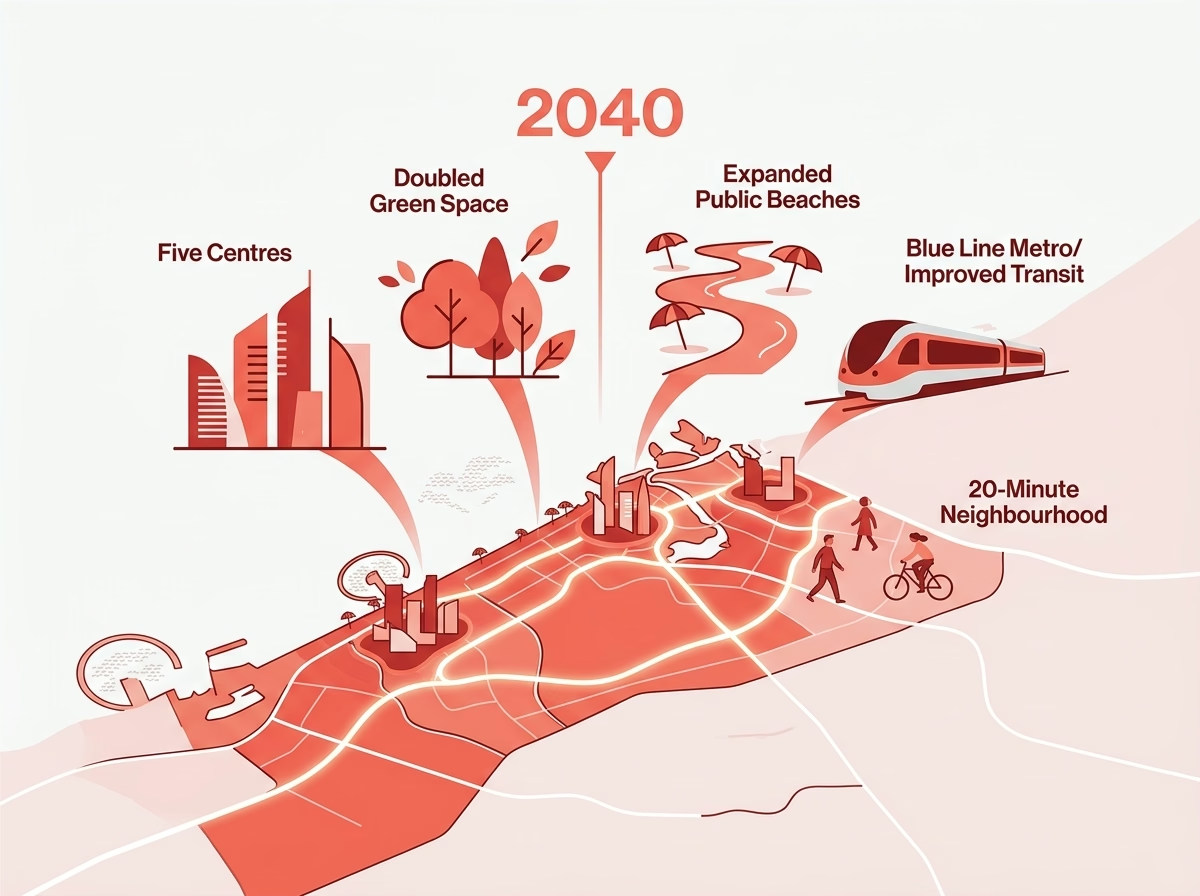
The strategic context is the Dubai 2040 Urban Master Plan, which positions Expo City as one of five anchor centres in the southern half of the emirate and the focal point of the city's sustainability and innovation cluster. If you are weighing Dubai's southern districts for a future move, Expo City is part of the same story as Dubai South and the new airport, and it factors into long-term Dubai cost of living calculations once you account for distance from the city centre.
What became of the Expo 2020 site
When Expo 2020 closed on 31 March 2022 the question on most visitors' minds was whether the iconic structures would be demolished. The answer turned out to be no for the headline assets. About 80 percent of Expo 2020's built infrastructure was retained, with the most architecturally significant pavilions kept as permanent fixtures.
The six-month interim between Expo's closing day and Expo City Dubai's October 2022 reopening was used to convert volunteer dorms into residential apartments, rebrand wayfinding, and prepare the site for COP28. The Cabinet decision establishing ECDA gave the new district its own legal authority, regulatory powers, and free-zone status, all anchored in federal law rather than emirate-level decree.
By 2026 the district has matured. The streets are walkable, the F&B mix is broader, residential occupancy is climbing, and the pavilion programme cycles through curated exhibitions rather than the static national displays of Expo 2020. The official name remains Expo City Dubai, used consistently across signage, the metro station (still called Expo 2020), and federal UAE portals.
The places worth visiting today
Expo 2020 site, 2026
Expo City Dubai at a glance
The seven retained icons
Plus a fourth function
Expo City retained seven of the most-recognised pavilions and built features from Expo 2020. The full list with current status:
| Pavilion / feature | Theme | Status in 2026 | Ticket needed |
|---|---|---|---|
| Al Wasl Plaza | The 67-metre central dome, projection-mapped daily | Permanent, free to walk around | No (free, projections in evening) |
| Terra | The Sustainability Pavilion, immersive exhibits on planetary boundaries | Permanent, full visitor centre | Yes, day ticket |
| Alif | The Mobility Pavilion, history of human movement and connection | Permanent, full visitor centre | Yes, day ticket |
| Garden in the Sky | 55-metre rotating observation tower | Permanent, public viewing | Yes, separate ticket |
| Vision Pavilion | Founding-leader storytelling and UAE Vision exhibits | Permanent | Yes, day ticket |
| Women's Pavilion | Curated exhibits on women's contributions, with Cartier | Open for events and exhibitions | Varies |
| Surreal water feature | Choreographed water show in the central concourse | Free, daily evening shows | No |
The country pavilions of Expo 2020 are gone or repurposed. Around them, the urban fabric has filled in with restaurants, kid-friendly play zones, the Expo Centre venues used for conferences, and dedicated event lawns that host concerts, weekend markets, and festivals.
Plan for at least half a day. Families typically combine Terra, the Garden in the Sky, and a meal around Al Wasl Plaza. Couples often anchor the visit on the evening dome projections and a sit-down dinner. Visitors with an architectural interest can spend a full day wandering the pavilion exteriors.
Practical visitor info
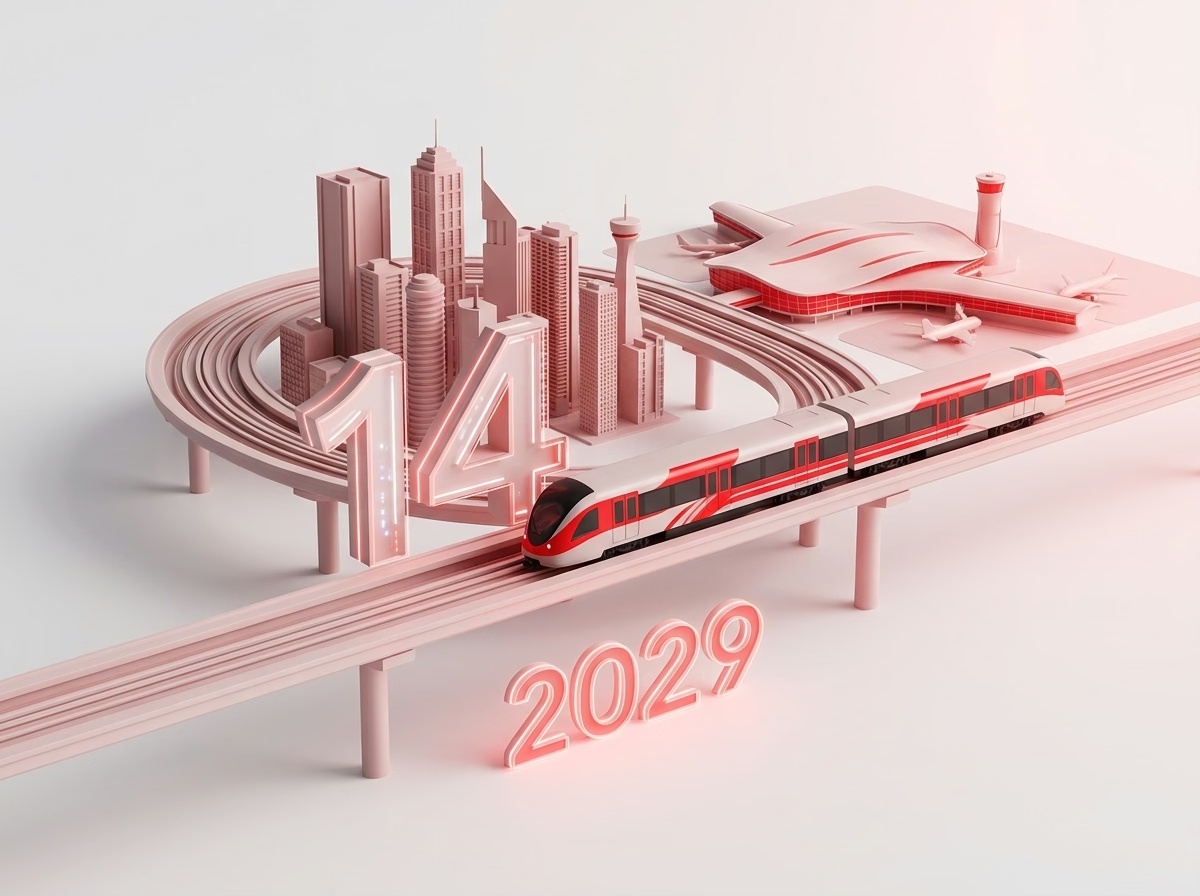
Getting there is straightforward. The Dubai Metro Red Line has an extension (the former Route 2020) that terminates at the Expo 2020 station, a direct walk into the district. By car, the district is signed off Sheikh Mohammed bin Zayed Road (E311) about 35 minutes from Downtown Dubai. Parking inside the district is mostly free. As The National reported when the Route 2020 extension opened, the line serves Expo City as its southern terminus; metro trains run from about 05:00 to midnight on weekdays and later on weekends.
Admission to the public areas, including walking around Al Wasl Plaza and the gardens, is free. Individual pavilions with curated exhibits, Garden in the Sky, and event tickets are paid. Day passes covering multiple pavilions are sold through the official Expo City Dubai site and at the gates. Prices have stayed broadly comparable to a Dubai museum visit; check the official site for current 2026 rates before you go.
Opening hours run roughly from 10:00 to 22:00, with extended hours during major events. Restaurants stay open later. The district is family-friendly, stroller-accessible, and prayer rooms are available throughout.
If you are coordinating a visit with family from Germany or Switzerland during a winter trip, the practical advice we give in our guide for German expats moving to Dubai also applies to short visits: book Expo City for a cooler morning or a mid-evening slot, especially May through September.
Expo City as a free zone: ECDA explained
The angle most visitors miss is that Expo City Dubai is also a UAE free zone. The Expo City Dubai Authority (ECDA) was established as the federal entity governing the district. ECDA functions as both a local authority (planning, licensing, event permits) and a free-zone authority issuing commercial licences to companies that want to base themselves inside the district.
ECDA licences allow 100 percent foreign ownership, full repatriation of capital and profits, and access to UAE corporate tax structures including the 0 percent rate for qualifying free-zone income on qualifying activities. Permitted activities lean toward the district's thematic identity: sustainability, mobility, future technology, energy, food security, urban innovation, education, professional services, events, and consultancy.
Setting up an entity inside ECDA generally involves choosing the licence category, selecting business activities, providing shareholder and director documentation, leasing office space inside Expo City (flexible options exist, from co-working through to dedicated office floors), and going through ECDA's compliance review. Pricing is positioned in the mid-tier of UAE free zones. Indicative ranges sit between the lower-cost startup options and the premium DIFC and ADGM tiers, but exact 2026 fees should be confirmed directly with ECDA at time of application. Our broader Dubai company setup cost breakdown gives the full picture across mainland and free-zone alternatives.
If you are weighing free zone against mainland, our mainland vs free zone guide covers the core trade-offs (trading rights inside the UAE, visa quotas, office requirements). The short version: free zones give you 100 percent ownership and tax advantages but constrain your trading rights to free-zone clients and exports. ECDA is no exception.
ECDA vs DMCC vs IFZA: when does Expo City make sense?
Free zone decision
Which Dubai free zone fits your business?
A simple three-way fork between ECDA (Expo City), DMCC, and IFZA, by founder profile.
ECDA
- Clean-tech or sustainability narrative
- Events and activations inside Expo City
- Consultancy serving COP-adjacent clients
- Founders who want a high-profile federal address
DMCC
- Diamond, gold or commodities trader
- Crypto firm wanting JLT credentials
- 4,000+ activities, premium address
- Sales-driven trading houses
IFZA
- Solo consultant or small services LLC
- Wide 1,500+ activity range
- Flex-desk start, low entry cost
- Founders prioritising spend over address
Here is the practical comparison founders ask for:
| Criterion | Expo City (ECDA) | DMCC | IFZA |
|---|---|---|---|
| Location | Dubai South, near new airport | Jumeirah Lakes Towers (JLT), central | Dubai Silicon Oasis, mid-city |
| Address prestige | High, federal authority district | Very high, JLT skyline | Moderate, business park |
| Licence cost indicative | Mid-tier | Premium tier | Entry to mid-tier |
| Activities focus | Sustainability, innovation, mobility, events, professional services | Commodities, crypto, trading, professional services (4,000+ activities) | Wide general business activities (1,500+) |
| Office requirement | Yes, flex options available inside the district | Yes, flex desk to full floor | Flex desk possible from launch |
| Visa quota | Tied to office size | Tied to office size | Tied to office size |
| 0 percent CT on qualifying free-zone income | Yes | Yes | Yes |
| Best fit | Founders whose activity ties to sustainability, innovation, or events; companies wanting a high-profile federal-authority address | Trading houses, crypto firms, established professional-services groups wanting JLT credentials | Cost-sensitive founders who want a recognised free zone with broad activity flexibility |
ECDA makes the most sense when your business narrative ties to the district's identity, namely sustainability, mobility, urban innovation, food security, education, or events. If you are an events agency planning to run multiple activations inside Expo City, a clean-tech startup raising on a sustainability narrative, or a consultancy serving COP-adjacent clients, ECDA gives you both the licence and the address. DMCC remains the workhorse for trading and crypto. IFZA remains a strong default for cost-conscious general-business founders.
A startup in clean energy might pick ECDA because the address itself signals the thesis. A diamond trader will keep picking DMCC. A solo consultant from Munich starting a consulting LLC will compare ECDA's mid-tier pricing against IFZA and pick on cost.
COP28 and the events legacy
Expo City hosted the 28th United Nations Climate Change Conference (COP28) from 30 November to 12 December 2023. The conference brought roughly 80,000 accredited participants to the district and used the inherited Expo 2020 venues. COP28 was reported in detail by regional press, including Khaleej Times coverage of the conference and its outcomes.
The conference left two practical legacies. First, the district's events infrastructure was upgraded for international summits and remains in use for major conferences, corporate events, and government ceremonies. Second, Expo City was confirmed as one of the region's primary venues for high-profile events, sitting alongside the Dubai World Trade Centre. Regular programming in 2026 includes weekly weekend markets, family events, art and design weeks, and corporate conferences. The official events calendar publishes new bookings on a rolling basis.
Living in Expo City: the Expo Village angle
A less-publicised feature of Expo City is its residential component. During Expo 2020, the southern part of the district housed roughly 3,500 apartments built for the workforce and volunteers running the six-month event. Post-Expo, those units were renovated and opened as Expo Village, a residential community now home to thousands of mixed-income residents.
The apartments range from studios to multi-bedroom units and are part of the broader Expo City master plan that also includes future residential expansions over the coming years. Rents have generally tracked the lower-to-mid end of Dubai South pricing, which means meaningfully cheaper than central Dubai for comparable square footage but with the trade-off of distance from the city centre. Connectivity by metro (one direct line) and road is the practical compensation.
For DACH families weighing Expo Village as a base, the calculation is similar to other Dubai South neighbourhoods: cheaper rent, longer commute, access to newer infrastructure, growing F&B and retail mix, and proximity to the new Al Maktoum International Airport when it opens fully to commercial passenger traffic. The German School Dubai options are mostly in the city's older neighbourhoods, so school commute is the variable that often decides whether Expo Village suits a family.