Bringing medication to Dubai is one of the most overlooked parts of trip planning, and it is the one most likely to cause trouble at the airport. The UAE has a structured medication-control system run by the Ministry of Health and Prevention (MOHAP), and the rules are stricter than in most of Europe. A common over-the-counter painkiller at home can be a controlled substance here. A daily prescription you have taken for years can require a permit before you board.
This guide gives travellers a clear, calm walkthrough of bringing medication to Dubai under the 2026 rules. You will learn the four-category framework MOHAP uses, exactly which documents to carry, how to apply for the UAE medication permit step by step, and what to expect at Dubai customs. The same framework decides which medicines allowed in Dubai you can simply pack, and which ones need paperwork. Read it once before you pack, and you will travel without surprises.
Bringing Medication to Dubai in 2026: The Short Answer
If you are wondering what medications you can bring to Dubai, the short answer is: most standard travel medications are fine if you carry the original packaging and a copy of your prescription. Problems happen only with two specific groups, controlled substances (which need an eDrug permit before you fly) and a small banned list (which has no exception, even with a prescription). The rest of this guide breaks those groups down so you know exactly where your own medication sits.
The system applies the same way to tourists, business visitors, and residents returning to the UAE. The volume rule of thumb is also simple: the medicines allowed in Dubai for personal use cover up to three months of supply, and anything beyond that triggers a separate import process you usually do not need as a traveller.
The Four-Category System for Bringing Medication to Dubai
Pack and go, no documents
Paracetamol, ibuprofen, antihistamines (loratadine, cetirizine), antacids, standard cough syrups, loperamide. Up to 3 months personal supply in original packaging.
Carry your English Rx
Most antibiotics, blood-pressure medication, statins, asthma inhalers, common diabetes and thyroid meds, most antidepressants. Original packaging, prescription in hand luggage.
Apply for the eDrug permit first
Codeine combinations, tramadol, ADHD meds (methylphenidate, lisdexamfetamine), benzodiazepines (Valium, Xanax), strong opioids, some sleeping pills. Permit + doctor's letter + Rx required.
Leave it at home
Cannabis-derived products including CBD oils, gummies, and vapes regardless of THC content. Kratom, certain synthetic cannabinoids, khat, large quantities of poppy seeds.
MOHAP groups all medications into four categories. Knowing which bucket your medication sits in tells you exactly what paperwork you need.
| Category | Status | What you need | Examples |
|---|---|---|---|
| 1. Freely allowed | OTC, no documents required | Original packaging | Paracetamol, ibuprofen, most antihistamines, antacids |
| 2. Prescription-required | Carry the original Rx | English-language prescription, original box | Most antibiotics, blood-pressure meds, asthma inhalers, statins |
| 3. Controlled, permit-required | eDrug permit before you fly | Permit + Rx + doctor's letter | Codeine combinations, tramadol, ADHD meds, benzodiazepines |
| 4. Banned, no exception | Cannot be imported | None, do not bring | Cannabis-derived products (including most CBD), kratom, some research chemicals |
The full MOHAP restricted-list lookup is available on the federal services portal at u.ae's controlled medication import page. When in doubt about a specific drug, check the lookup tool before you fly. It is updated as the list changes.
A practical note for DACH travellers: codeine is sold over the counter in many German pharmacies, but in the UAE it is category 3. If your standard winter cold remedy contains codeine, you need a permit. This is the single most common surprise we see.
Category 1: Freely Allowed Over-the-Counter Medication
Category 1 covers the medications you can bring without any paperwork at all. These are the basics most travellers pack: standard painkillers, antihistamines, antacids, cold and flu tablets without controlled compounds, motion-sickness pills, and the usual first-aid kit.
The rule of thumb for category 1 is three months of personal supply in the original manufacturer packaging. Loose pills in a pill organiser are technically allowed if you can show the original boxes alongside, but customs officers are happier when blister packs are intact. If you use a pill organiser for your daily routine, keep one original box per medication in your hand luggage as proof.
Common medications that sit safely in category 1:
- Paracetamol / acetaminophen
- Ibuprofen and other standard NSAIDs
- Loratadine, cetirizine, and most non-sedating antihistamines
- Antacids and proton-pump inhibitors (omeprazole OTC strength)
- Standard cough syrups without codeine or pseudoephedrine
- Loperamide (anti-diarrhoeal)
- Standard rehydration salts and electrolytes
If your entire travel medication list falls inside category 1, you can stop reading the permit sections and skip to the airport walkthrough at the end. These are the most common medicines allowed in Dubai without any documentation at all, and you are fine.
Category 2: Prescription Medications You Can Bring With Your Rx
Category 2 covers the bulk of regular prescription medication, the daily pills millions of travellers carry. Most antibiotics, blood-pressure medication, statins for cholesterol, asthma inhalers, common diabetes medication, thyroid medication, and most antidepressants sit here. You do not need a permit, but you do need to carry the prescription with you.
What "carrying the prescription" means in practice:
- A copy of your original prescription from your home doctor
- The prescription must be in English or accompanied by an English translation. A pharmacy print-out in German is not enough on its own; pair it with a short letter from your doctor in English summarising the diagnosis and medication
- The medication must travel in its original manufacturer packaging, with the printed name matching the prescription
- Carry it in your hand luggage, not in your checked bags. Lost-luggage cases for prescription medication trigger a slow replacement process at a UAE pharmacy and can cost a day of your trip
If you are travelling for more than three months and need a larger supply, you cross from "personal use" into "import" territory and the rules tighten. For ordinary tourist trips of a few days to a few weeks, the three-month allowance is more than enough.
A frequent question is whether you need a doctor's letter on top of the prescription. For category 2 medications, the prescription alone is sufficient at customs. The doctor's letter becomes mandatory only when you move into category 3.
Category 3: Controlled Substances and the eDrug Permit
Category 3 is where the system gets stricter and where most travellers get caught out. These are medications that contain controlled compounds: codeine combinations, tramadol, methylphenidate and amphetamines used for ADHD, benzodiazepines such as diazepam, alprazolam and lorazepam, strong opioid painkillers, some sleeping pills, and certain anti-anxiety medications.
You cannot bring category 3 medication into the UAE on a prescription alone. You need a MOHAP eDrug permit issued before you fly. Without it, the medication is held at customs and an investigation follows.
Common category 3 drugs travellers ask about:
- Codeine combinations (any cough syrup, painkiller, or migraine tablet listing codeine on the box)
- Tramadol
- ADHD medication: methylphenidate (Ritalin, Concerta, Medikinet), lisdexamfetamine (Elvanse / Vyvanse), atomoxetine in some forms
- Benzodiazepines: diazepam (Valium), alprazolam (Xanax), lorazepam (Tavor / Ativan), oxazepam
- Strong sleeping pills with controlled compounds (zolpidem in some markets)
- Stronger opioid painkillers: oxycodone, morphine derivatives
- Some testosterone-replacement and hormone preparations
If you take any of these regularly, do not assume your prescription will be honoured at Dubai customs. It will not, and the consequences sit in territory covered by UAE drug law. For travellers in this group, applying for the UAE medication permit weeks before the trip is the single most important pre-travel task. We document the customs-level enforcement and risk side of this in our guide to drug offenses in Dubai, which is required reading for anyone in this category.
How to Apply for the UAE Medication Permit Step by Step
The eDrug permit, often referred to as the UAE medication permit, is a federal MOHAP system, free for personal-use tourist applications, and processed online before you travel. The application sits on the federal services portal at u.ae, which routes you into the MOHAP eDrug service. Plan to apply at least two weeks before your trip. The official processing time is five working days, but it can extend if the application is incomplete or returned for clarification.
The step-by-step process for bringing medication to Dubai under category 3:
- Register an account on u.ae using your passport details and a working email address. UAE Pass is supported if you already have one, but a standard email account is enough for first-time tourist applicants.
- Open the Controlled Drug Import application under the MOHAP services tab. The form asks for traveller details, arrival date, return date, and a list of every controlled medication you plan to bring.
- Upload your documentation for each controlled medication:
- Scanned passport bio-page
- Original prescription in English, or original-language prescription with English translation
- Doctor's letter in English stating the diagnosis, the medication name (with active ingredient), the daily dose, and the total quantity you need for the trip duration
- Photograph or scan of the medication's original packaging clearly showing the active ingredient
- Submit and wait for the five-working-day processing window. The portal will email status updates. If the application is returned for missing documents, fix and resubmit promptly; the clock restarts.
- Download and print the permit once approved. Carry the printed permit alongside the medication in your hand luggage. Save a digital copy on your phone as a backup.
- Declare at customs on arrival. Use the red channel at Dubai International Airport and present the permit, the prescription, and the medication together. The process takes a few minutes when paperwork is complete.
The quantity authorised by the permit is tied to your trip duration. If you are travelling for two weeks, the permit covers a two-week supply, not an open-ended stash. Bring exactly what the permit lists.
Category 4: Banned Substances With No Exception
Register on u.ae
Passport details + email. UAE Pass optional.
Open MOHAP application
"Controlled Drug Import" service. Enter trip dates and medication list.
Upload documents
Passport scan, English Rx, doctor's letter, photo of packaging.
5 working days
MOHAP reviews. Email status. Resubmit if returned.
Print + declare
Carry the permit in hand luggage. Red channel at DXB.
Category 4 is short, strict, and absolute. These substances cannot be imported under any prescription, any permit, or any humanitarian exception. Bringing them in is treated the same way as importing illegal drugs.
The banned-list categories most relevant to travellers:
- Cannabis-derived products of any concentration, including most CBD oils, CBD gummies, and CBD vape cartridges. Even products that are legal in your home country and sold in pharmacies as wellness items are banned here. This is the single biggest source of accidental tourist arrests at Dubai airport.
- Kratom and kratom-derived products
- Certain research chemicals and synthetic cannabinoids
- Poppy seeds in large quantities (small culinary amounts in baked goods are fine; loose poppy seeds in commercial quantities are not)
- Khat / qat
The penalty path for any of these starts at customs detention and runs into formal drug-import proceedings, which we cover in detail under UAE controlled-substance penalties. The exposure is serious enough that there is only one safe answer: do not bring them. If a wellness product at home contains CBD or hemp extract, leave it at home and source a UAE-legal alternative on arrival.
The list of banned compounds is reviewed periodically by MOHAP. Recent UAE press coverage of MOHAP banned-list updates is regularly summarised by Gulf News, and that is the best source for keeping the list current between your trips.
What Documents to Always Carry With You
Whatever category your medication falls into, the documents you keep in your hand luggage form your defence at customs. The minimum kit for a smooth arrival:
- Your original prescription, in English or with an English translation
- The medication in its original manufacturer packaging, with the printed drug name matching the prescription
- For category 3 medication: the printed eDrug permit and a doctor's letter in English stating diagnosis, medication, dose, and trip-duration quantity
- A digital backup of every document on your phone or in a secure cloud folder
The translation does not need to be a sworn translation. A clear, signed letter from your doctor in English is enough, and it is faster and cheaper to obtain than a certified translation. Many DACH doctors will write this letter on request for routine travel; if yours will not, a pharmacy print-out plus a short note from a private clinic is a reasonable substitute. German-UAE Chamber of Commerce travel guidance at vae.ahk.de is a useful reference if you are coordinating documentation from Germany.
Keeping a digital backup matters more than people realise. Phones run out of battery, paper gets lost in transit. A copy in a cloud folder you can access from any device, or printed and stored in a second bag, removes the worst failure modes.
At Dubai Customs: What to Expect on Arrival
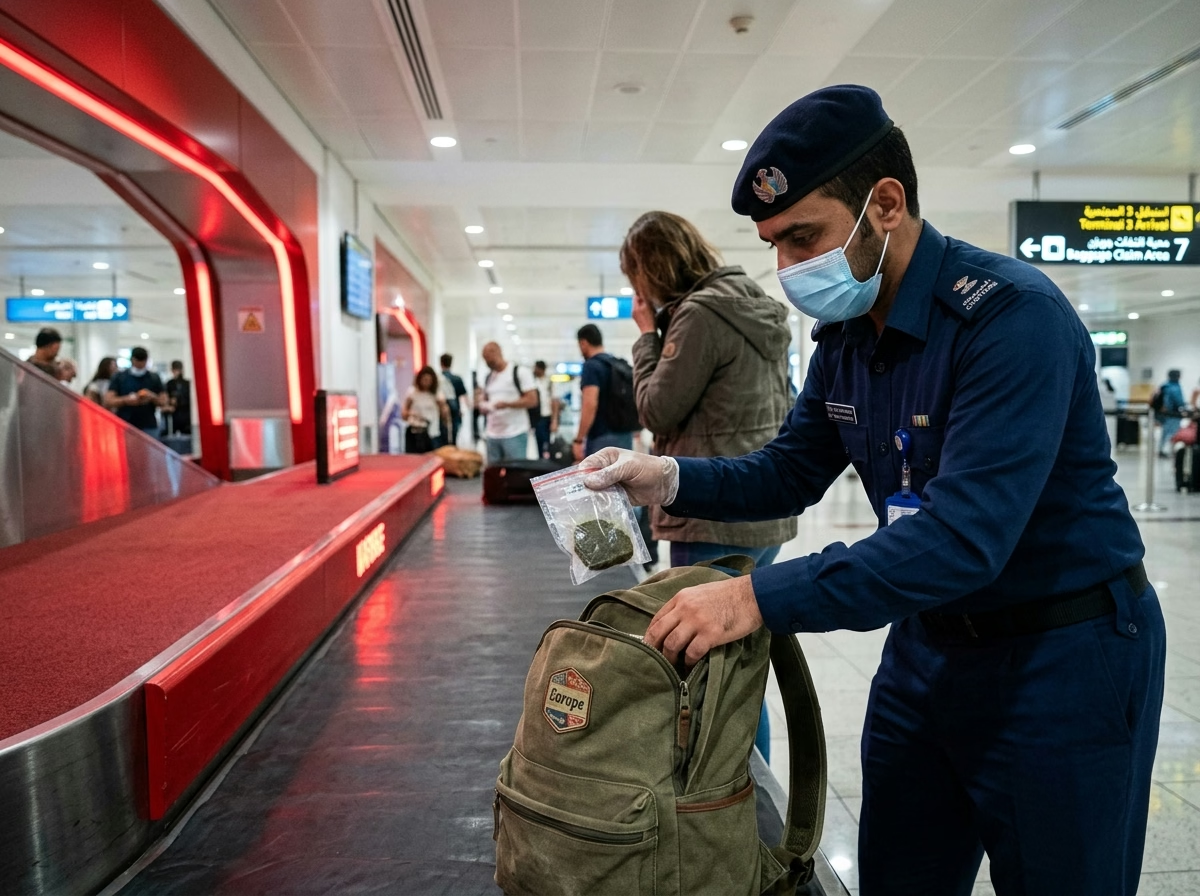
Dubai International Airport runs a standard red-channel / green-channel customs system. If you are carrying any prescription medication or any permit-controlled medication, use the red channel, even if you think your medication is fine.
The reasoning is simple. Declaring proactively when you have the paperwork is a brief conversation that takes a few minutes. Walking through the green channel with category 3 medication, or with anything random-checked, escalates much faster. The penalty for non-declaration of a permit-required drug is materially worse than for declaration without permit, and far worse than for declaration with permit. Declaration is the protective move.
What the conversation looks like in practice:
- Officer reviews your prescription, permit, and medication side by side.
- Quantities are spot-checked against the permit total.
- If everything matches, you are waved through. The whole exchange typically takes between two and ten minutes.
- If something is missing, the medication is held at customs while the situation is clarified. This can mean a phone call to a duty doctor, an inspection by a customs officer with medical training, or in the worst case a formal referral. Having complete paperwork in your hand from the start avoids every one of these.
If you arrive without the right paperwork for a category 3 medication, do not try to hide it. The "what if I didn't get the permit" scenario sits under the same enforcement framework as any other unauthorised controlled-substance import. Declare, explain, and accept that the medication may be confiscated. Confiscation is the manageable outcome; concealment is the one that escalates.
Travellers also sometimes worry about smaller infractions during their stay, which we cover separately under common tourist fines in Dubai.
Practical Example: The DACH Standard Travel Medication Kit
To make this concrete, here is a typical mid-thirties DACH traveller's two-week trip kit, sorted by category. This is illustrative; check your own medications against the MOHAP lookup.
- Category 1 (no documents): ibuprofen 400 mg, paracetamol 500 mg, loratadine 10 mg for hay fever, antacid tablets, electrolyte sachets, plasters and standard first-aid items.
- Category 2 (prescription required): birth-control pills, a beta-blocker for blood pressure, a salbutamol inhaler.
- Category 3 (eDrug permit required): none. If the same traveller occasionally takes a low-dose benzodiazepine for flight anxiety, that one item moves them into category 3 and triggers a permit application two weeks before the flight.
- Category 4 (banned): none. The CBD gummies the traveller's partner uses for sleep at home stay at home.
This is the pattern most travellers fit into. The vast majority of trips need nothing more than category 1 and 2 documentation. Only category 3 introduces real planning work, and that work is a one-time application per trip. Health insurance continuity for ongoing prescriptions during longer stays is a related planning question we cover in our Dubai health insurance guide.
What Happens If You Bring a Banned Substance Without a Permit
This is the question travellers ask in private and not in public, so we will answer it directly. There is a risk-tier difference between bringing a category 3 medication without the permit and bringing a category 4 banned substance.
Category 3 without permit, declared at the red channel: the medication is usually held at customs. You may be asked to provide additional documentation. In many cases the medication is confiscated and you are allowed to enter. In some cases, depending on quantity and the specific compound, a more formal investigation follows. The outcome ranges from a written warning to a formal referral.
Category 3 without permit, not declared and found at random check: the situation escalates immediately. The same medication that would have been confiscated at the red channel becomes evidence of attempted concealment. Outcomes here run from significant fines through to detention and a referral into formal controlled-substance proceedings.
Category 4 banned substance, declared or not: treated as drug import. The enforcement track is the same one that applies to any unauthorised controlled substance, regardless of intent or origin.
The single most important rule across all three scenarios: always declare at the red channel. Declaration converts most situations from drug-import proceedings into administrative ones. Concealment converts administrative situations into drug-import ones. The choice is binary, and it is the choice that decides which side of the system you experience.